Lanell supports Tenzing’s investment in Pimcore

Lanell was pleased to support European technology investor Tenzing in connection with its investment in Pimcore.

Pimcore is a Salzburg-based enterprise software company providing a unified platform for product, master, customer, content and digital asset data. Its platform has more than 120,000 installations and over 400 enterprise customers globally. Tenzing announced its investment on August 27th, acquiring a majority stake from Nordwind Growth, subject to regulatory approval. 

Pimcore is particularly interesting to Lanell because it sits at the intersection of several areas we know well: enterprise software, product information management, data governance and the rapidly emerging requirements created by AI.

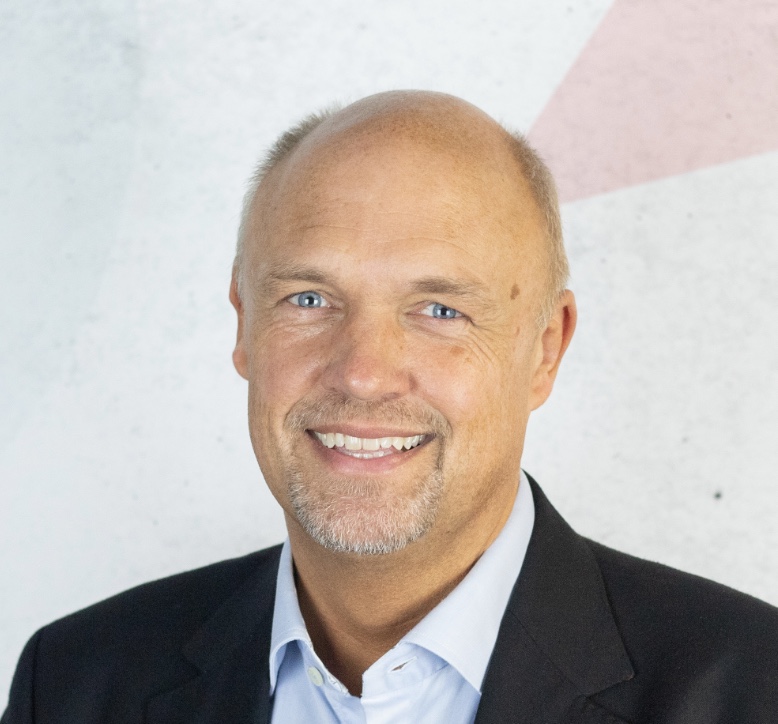
Under Nordwind’s ownership, Pimcore transitioned from open source to an open-core commercial model, increased ARR by more than five times, reached operational profitability and gained recognition in two Gartner Magic Quadrants. Founder and Co-CEO Dietmar Rietsch describes governed enterprise data as the increasingly critical foundation on which enterprise AI must operate. 

Drawing on our experience in enterprise software and the PIM market, Lanell was pleased to contribute to Tenzing’s work around the investment. We believe Pimcore has built a differentiated platform in a market whose strategic importance is likely to increase substantially as enterprises move from experimenting with AI to deploying it across core business processes.

Read more here: https://lnkd.in/p/e3_dyuxZ

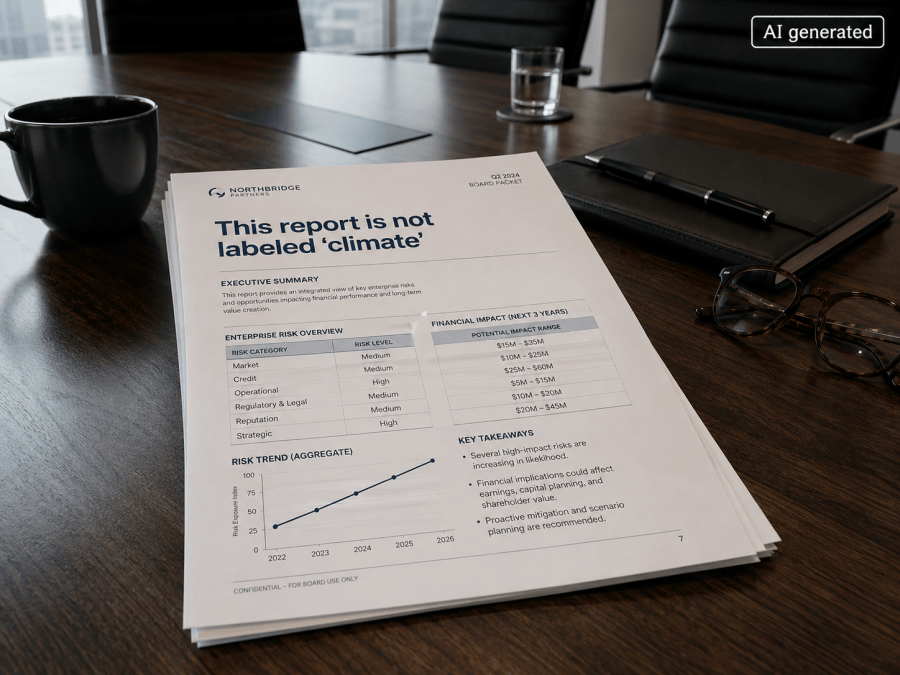
Climate risk does not arrive in the boardroom labelled ‘climate’

Climate change may move up and down CEO priority lists, but the underlying business consequences do not disappear with the headlines.

They arrive in much more familiar forms: energy volatility, supply-chain disruption, water scarcity, insurance costs, changing customer requirements, sourcing risk, regulation and pressure on working capital.

For investors and boards, that distinction matters.

A company does not necessarily need a climate event to experience climate-related financial exposure. It may instead face a supplier unable to deliver, increased energy costs, more expensive insurance, changing regulation or customers demanding greater transparency across their own supply chains.

At Lanell, we therefore believe sustainability should increasingly be assessed as part of a company’s resilience and operating model rather than as an isolated environmental programme.

The relevant question is not simply whether a company has a sustainability strategy. It is whether it understands its dependencies, has access to the right data and can adapt its business model as conditions change.

Niels Stenfeldt discussed this perspective in a recent LinkedIn post.

Read the post here:
https://www.linkedin.com/posts/stenfeldt_this-is-a-very-important-reality-check-activity-7461051500816072705-74cn

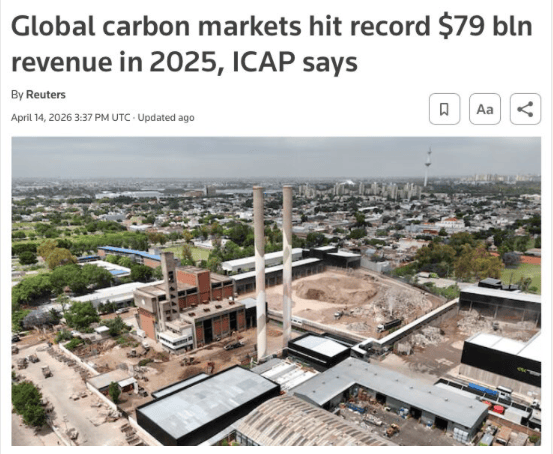
When carbon becomes a cost, sustainability reaches the P&L

The sustainability discussion changes fundamentally when carbon carries an economic cost.

At that point, emissions are no longer primarily a reporting or communications issue. They become relevant to sourcing, manufacturing, logistics, energy consumption, product design, investment decisions and ultimately margins.

For management teams and investors, this changes the nature of the discussion. The important questions become increasingly practical: Where is carbon embedded in the value chain? Can it be measured accurately? What alternatives exist? What does it cost to change? And where can lower emissions also result in lower costs, reduced risk or stronger customer propositions?

At Lanell, we see this as another reason why sustainability increasingly belongs within normal business and investment analysis rather than being treated as a separate ESG exercise.

Once externalities become costs, operational excellence and sustainability start to converge. Companies with better data, more efficient processes and greater control of their supply chains should therefore be better positioned to respond.

Read Niels Stenfeldt’s perspective here:
https://www.linkedin.com/posts/stenfeldt_sustainability-carbonpricing-manufacturing-activity-7450101219131285504-gp1L

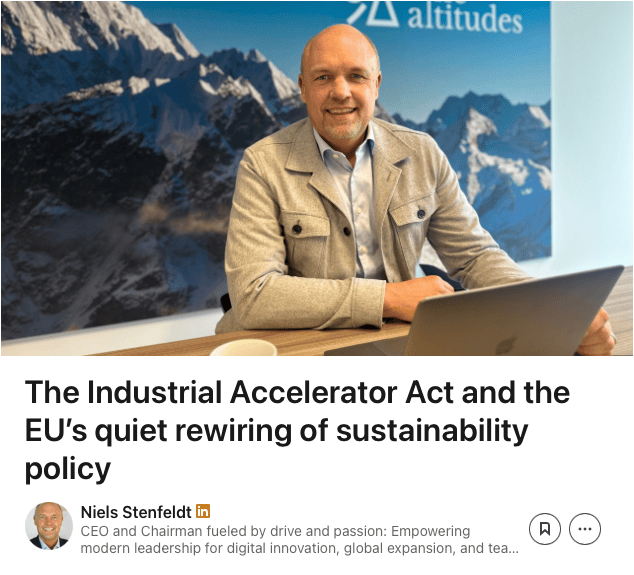
Sustainability is becoming European industrial strategy

Europe’s sustainability agenda is changing.

The European Commission’s evolving industrial policy illustrates a broader shift: decarbonisation is increasingly being connected with competitiveness, energy independence, resilience, circularity and strategic autonomy.

This matters because sustainability is no longer only about reducing environmental impact. For many industrial companies, it is increasingly about reducing dependency on scarce resources, improving energy productivity, strengthening supply chains and building businesses that are better equipped to compete in a changing global environment.

For Lanell, this reinforces an investment view we have held for some time. Sustainability and competitiveness should not be treated as opposing agendas. In many industries, the technologies and operating models that reduce resource consumption and dependencies are also those that improve productivity, resilience and long-term economics.

The real opportunity is therefore not to ask companies to sacrifice competitiveness for sustainability, but to identify where the two reinforce one another.

Niels Stenfeldt shared his perspective on this development following the European discussion around the Industrial Accelerator Act.

Read the article here:
https://www.linkedin.com/pulse/industrial-accelerator-act-eus-quiet-rewiring-policy-niels-stenfeldt-hepee

Sustainability is an operating-model question

At Lanell, we believe sustainability is increasingly less about communication and more about how companies are actually designed and operated.

Long-term change rarely happens simply because organisations receive more information or set more ambitious targets. It happens when incentives, processes, data and accountability make better decisions easier to take, and when sustainability becomes part of everyday commercial and operational choices.

That is why we increasingly look at sustainability through the same lens as operational excellence. Better data, greater transparency, stronger traceability and clearer accountability can improve both environmental outcomes and business performance. In that sense, sustainability is not a parallel agenda. It is part of building more resilient, efficient and better-managed companies.

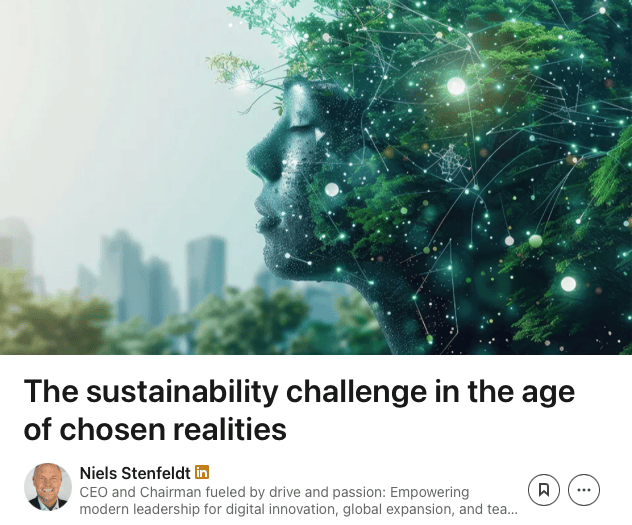
Niels Stenfeldt explored this perspective in his article, The sustainability challenge in the age of chosen realities, including the challenge of creating long-term progress in an environment increasingly shaped by short-term incentives and fragmented information.

Read the article here:
https://www.linkedin.com/pulse/sustainability-challenge-age-chosen-realities-niels-stenfeldt-sgkke

Lanell exits BitPeople and ClearView Trade ahead of planned merger

The shareholders prepare to bring the two companies together in a planned merger. The merger plan was approved by the owners on March 28th 2025, with the ambition of creating a stronger combined platform for future growth.

Lanell’s relationship with BitPeople dates back to 2009. During that period, we have been both investor and active partner in the development of the business, including supporting its Nordic expansion and the acquisitions of Acomi in Denmark and Adiles in Norway.

BitPeople has developed into a leading Nordic specialist in SAP Business One, while ClearView Trade has built a digital platform automating international trade processes including customs, export documentation and transportation workflows. Bringing the two capabilities together creates an interesting combination of ERP, supply-chain processes and trade automation.

For Lanell, the transaction marks the end of a long investment journey and the right point to hand the businesses into their next chapter. We are proud to have been part of their development and wish the owners, management and employees every success with the combined company.

Lanell invests in 9altitudes as Niels Stenfeldt joins as Group CEO

August 2024

In August 2024, Lanell made a significant investment in 9altitudes in connection with Niels Stenfeldt joining the company as Group CEO.

The investment was made alongside Waterland Private Equity and founder Filip Bossuyt, creating a close alignment between long-term ownership, entrepreneurship and operational leadership.

9altitudes is a European digital transformation company helping manufacturing and other complex businesses improve how they operate through technology. The company works across ERP, CRM, engineering, product lifecycle management, data, AI, smart factory and service processes, with strong partnerships across the Microsoft, PTC and Tulip ecosystems.

For Lanell, the investment reflects a core belief that the most attractive opportunities often combine strong market positions with the possibility for active value creation. 9altitudes had already built a significant European platform through organic growth and acquisitions, with further potential to scale the business, deepen its industry specialisation and strengthen its position as a leading technology partner to manufacturing companies.

The investment also represents Lanell’s approach to active ownership. Rather than investing purely as a financial shareholder, Lanell entered 9altitudes alongside Niels’ appointment as CEO, combining capital with direct operational responsibility for the company’s next phase of growth.

Leading the charge: Embracing WEEE compliance for a sustainable future

In today’s rapidly evolving regulatory landscape, businesses face increasing pressure to adapt to new environmental directives. One such directive that demands immediate attention is the Waste from Electrical and Electronic Equipment (WEEE) Directive. As a cornerstone of EU legislation, the WEEE Directive aims to mitigate the environmental impacts of electronic waste, a growing concern given the surge in electronic device usage.

Understanding the WEEE Directive

The WEEE Directive, established by Directive 2012/19/EU, sets forth comprehensive rules for producers, importers, and remote sellers of electrical and electronic equipment. The directive’s primary objective is to encourage the creation of environmentally friendly products and enhance the reuse and recycling of e-waste. This legislation mandates that producers take responsibility for the entire lifecycle of their products, ensuring their sustainable disposal.

The current landscape

Despite the directive’s significance, my research indicates a troubling gap in awareness among many businesses about the WEEE Directive and its national implementations. This lack of knowledge can lead to substantial risks, including significant fines and other sanctions. It’s imperative for businesses to not only understand but also comply with these regulations to avoid these potential pitfalls.

The environmental stakes are incredibly high. In 2021 alone, 13.5 million tonnes of Electrical and Electronic Equipment (EEE) were placed on the market, yet only 4.9 million tonnes of e-waste were collected in the EU. This discrepancy underscores the urgent need for enhanced compliance and proactive measures to manage e-waste effectively.

Key actions for businesses

To navigate this complex regulatory environment and turn compliance into a competitive advantage, businesses should focus on several key actions:

  1. Setting quantitative targets: Businesses must establish binding reduction targets to limit the environmental footprint of EEE. These targets should focus on reducing resource use, promoting efficiency, and minimizing waste. Clear, measurable goals can drive significant environmental benefits and demonstrate a company’s commitment to sustainability.
  2. Promoting Ecodesign: Integrating ecodesign principles is crucial. Products should be designed for longevity, repairability, and recyclability. This approach not only complies with regulatory requirements but also enhances product value and customer satisfaction. Implementing recycled content targets further supports sustainability by reducing reliance on virgin materials.
  3. Right to Repair: A robust “right to repair” framework ensures that products can be easily repaired throughout their lifespan. This includes providing access to repair information, spare parts, and software updates. Empowering consumers and independent repairers with the tools they need to maintain products extends the product lifecycle and reduces waste.
  4. Increasing Producer Responsibility: Enhancing producer responsibility is essential for effective e-waste management. Producers should bear financial and operational responsibility for the collection and proper disposal of e-waste. This can include participating in nationwide WEEE return networks and meeting collection and reuse targets. Such measures ensure that producers are accountable for the environmental impact of their products.
  5. Enhancing WEEE collection: Improving WEEE collection processes is vital. Businesses should develop consumer-friendly return systems and provide financial incentives to encourage high collection volumes. Ensuring easy and convenient e-waste return options for consumers can significantly increase collection rates and reduce improper disposal.
  6. Stopping illegal exports: Stricter controls on the export of e-waste are necessary to prevent environmental damage in receiving countries. Businesses must ensure that only functional, reusable items are shipped, with clear documentation and compliance with international regulations. Preventing illegal exports protects both the environment and the reputation of responsible businesses.
  7. Banning destruction of insold EEE: Implementing legal bans on the destruction of unsold electronic products promotes resale and refurbishment. Businesses should prioritize selling or donating unsold goods rather than disposing of them. This practice not only reduces waste but also supports circular economy principles by keeping products in use for longer.

Turning Challenges into Opportunities

Embracing these actions is not just about regulatory compliance – it is about seizing business opportunities and demonstrating leadership for future generations. By adopting sustainable practices, businesses can differentiate themselves in the market, build stronger brand loyalty, and drive innovation. Sustainable practices often lead to cost savings, improved efficiency, and new market opportunities.

At Lanell we can help business use their power to make a significant positive impact on the environment and society. The WEEE Directive provides a framework, but it is up to businesses and their leaders to take proactive steps and go beyond mere compliance. By integrating sustainability into core business strategies, we can together turn regulatory challenges into opportunities for growth and positive change.

A call to action

Now is the time for businesses to take decisive action. Ensure compliance with the WEEE Directive, implement sustainable practices, and lead by example. The future of our environment depends on the actions we take today to manage e-waste responsibly. Contact us if you want help to commit to making a positive impact and shaping a more sustainable future for generations to come.

Together, we can lead the way towards a more sustainable, responsible, and innovative business landscape. Let’s embrace the challenge and turn it into an opportunity to create lasting value for our businesses and the planet.

(Picture credits: Image by Tung Lam from Pixabay)