Exciting innovations ahead: Lanell’s role in shaping the future of manufacturing with DMaaST

At Lanell, we are committed to leading the charge in adopting and advocating for sustainable technologies in the manufacturing sector. It is with great enthusiasm that we share our recent focus on the European Union’s groundbreaking DMaaST project. As specialists in digital product passports and event-based traceability platforms, Lanell and Niels Stenfeldt played a crucial advisory role to a prominent global manufacturer engaged in this transformative initiative.

Unpacking the Potential of DMaaST

The DMaaST (Digital Manufacturing as a Service Technology) project represents a seismic shift towards smarter, more resilient manufacturing ecosystems. It integrates several advanced technological layers designed to enhance the adaptability and sustainability of manufacturing processes. Here’s a closer look at the revolutionary components of the DMaaST platform:

  • Data Layer: This foundation layer utilizes ontologies and decentralized knowledge graphs to achieve real-time data integration across organizations, a critical factor in the seamless exchange of information and operational agility.
  • Digital Twin Layer: At the heart of DMaaST, cognitive digital twins operate at two levels—individual manufacturing services and broader sector value chains. These twins leverage expert knowledge, algorithm-driven analytics, and physical modeling to predict outcomes and optimize operations.
  • Decision Support Layer: Implementing a cutting-edge distributed decision support system, this layer harnesses Federated Deep Learning to refine production decisions, balancing multiple objectives for maximum efficiency.
  • User Interface Layer: The user-facing component of DMaaST delivers real-time scoreboards and assessments, offering stakeholders clear insights into production circularity and sustainability metrics.

Lanell’s Impact and Vision

Through our advisory role, Lanell has ensured that the principles of sustainable development and traceability are deeply integrated with the DMaaST framework. Our expertise in digital product passports has been instrumental in framing a platform that not only supports efficient manufacturing processes but also champions environmental stewardship.

Moving Forward with Sustainable Solutions

The DMaaST project is set to revolutionize how industries approach manufacturing, with a keen focus on sustainability and adaptability. By leveraging technologies between TRL3 and TRL6, DMaaST is paving the way for a new era in sectors such as aerospace and electronics, championing the adoption of Manufacturing as a Service (MaaS).

As we continue our journey at Lanell, our commitment to innovation remains unwavering. We believe in the power of technology to create a more sustainable future and are proud to be at the forefront of this transformative journey.

Let’s Innovate Together

Are you ready to explore how digital twins and smart manufacturing technologies can elevate your business? Contact us at Lanell. Our team of experts is ready to guide you through the complexities of digital transformation and help you harness the full potential of your manufacturing capabilities.

Let’s build a sustainable future together. Innovation starts here.

You can also read more about the EU project here: https://ec.europa.eu/info/funding-tenders/opportunities/portal/screen/how-to-participate/org-details/999999999/project/101138648/program/43108390/details

Product Traceability and Real-Time Digital Twins: The New Standard

In the current digital marketplace landscape, the emergence of Digital Product Passports represents a significant step forward in enhancing product transparency and accountability. These passports serve as a comprehensive digital record, detailing every aspect of a product’s journey – from manufacturing to disposal. This innovation, coupled with the use of real-time digital twins, is setting a new standard in product content management, offering a dynamic and accurate reflection of the product throughout its lifecycle.

Enhancing Traceability and Trust with Digital Product Passports

Digital Product Passports are instrumental in bridging the gap between the physical product and its digital representation. They provide customers with unparalleled access to data on the origins, composition, and journey of their purchased products. This level of detail is crucial for informed decision-making, allowing consumers to base their purchases on a deep understanding of the product’s environmental footprint, ethical standards, and compliance with regulations.

The Critical Role of Real-Time Digital Twins

Real-time digital twins complement Digital Product Passports by ensuring that the digital representation of a product is always aligned with its current state and specifications. This real-time update capability is essential for maintaining accuracy in product content, as it reflects changes or updates to the product as they occur. When customers make purchasing decisions based on the data within these digital twins, it’s imperative that this information matches the actual product they receive. Any discrepancy between the digital twin data and the product’s Digital Product Passport can erode trust rapidly, leading to dissatisfaction and, potentially, legal issues with product returns.

The Intersection of AI, Governance, and Consumer Trust

The integration of generative AI in managing product content through Digital Product Passports and real-time digital twins emphasizes the importance of governance more than ever. Governance ensures that the generative processes powered by AI remain within defined quality, compliance, and ethical boundaries. It’s this structured oversight that maintains the integrity of the data, ensuring consistency between the product information presented to consumers and the actual product. Without strict governance, the potential for discrepancies arises, which can diminish consumer trust, violate laws, and increase the likelihood of product returns.

In this evolving digital landscape, where consumers demand transparency and accountability, the alignment between the data in Digital Product Passports and real-time digital twins is non-negotiable. This synergy is crucial for upholding trust and ensuring that as products move from concept to consumer, they remain within the scope of legal and ethical standards. The future of product content management hinges on this delicate balance, highlighting the necessity for continuous innovation in AI and governance strategies to adapt to these changing demands.

Are you set up for this ? if not reach out.

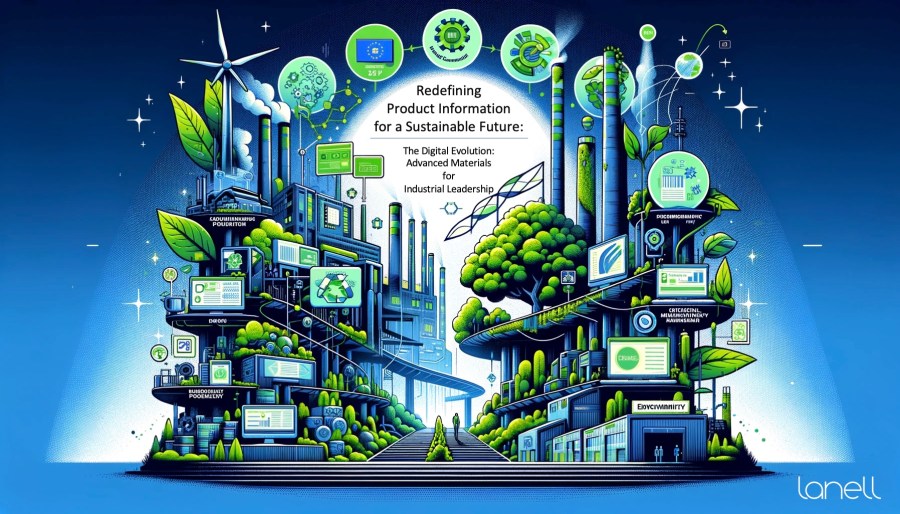
Redefining Product Information for a Sustainable Future: The Digital Evolution

In an era where sustainability and digital innovation intersect, the European Commission’s strategy on “Advanced Materials for Industrial Leadership” outlines a transformative path for manufacturing and product information. This document underscores the strategic imperative of decommoditizing product information, advocating for a nuanced approach where product data becomes a strategic asset. It emphasizes the urgent need for a robust digital infrastructure capable of supporting a new industrial landscape that prioritizes sustainability, innovation, and comprehensive data management.

Central to this transformation is the Digital Product Passport (DPP) initiative, designed to revolutionize product traceability, lifecycle management, and support for the circular economy. This initiative underscores the transition towards a more sustainable and innovative European market, highlighting the necessity for scalable, secure, and interoperable digital platforms. These platforms are envisioned to serve as the backbone for managing intricate product information, enabling real-time data access, sharing, and decision-making across the value chain.

A pivotal aspect of this journey is the evolution from static data models to dynamic digital twins. Traditional models, limited in their adaptability and real-time update capabilities, are yielding to digital twins’ live, interactive replicas of physical products. Digital twins facilitate a comprehensive understanding of products throughout their lifecycle, enabling continuous optimization and more sustainable strategies. This dynamic approach enhances the Digital Product Passport’s functionality, providing detailed transparency that static models cannot match.

The strategy’s emphasis on advanced materials and digital infrastructure invites industry leaders, policymakers, technologists, and environmental advocates to collaboratively develop the standards, technologies, and practices driving this transformation. By investing in digital infrastructure and embracing the principles of the DPP and digital twins, we can forge a sustainable, innovative, and resilient future.

The European Commission’s strategy is more than a policy document; it’s a roadmap for the digital age, urging us to redefine product information management. As we implement the DPP and enhance our digital infrastructure, embracing digital twins, we face an unparalleled opportunity to drive innovation, sustainability, and economic resilience. This transformative journey towards a digital, greener future is filled with challenges and opportunities, calling for collaborative efforts to redefine the boundaries of product information management and manufacturing.

Contact Lanell if you want to know more.